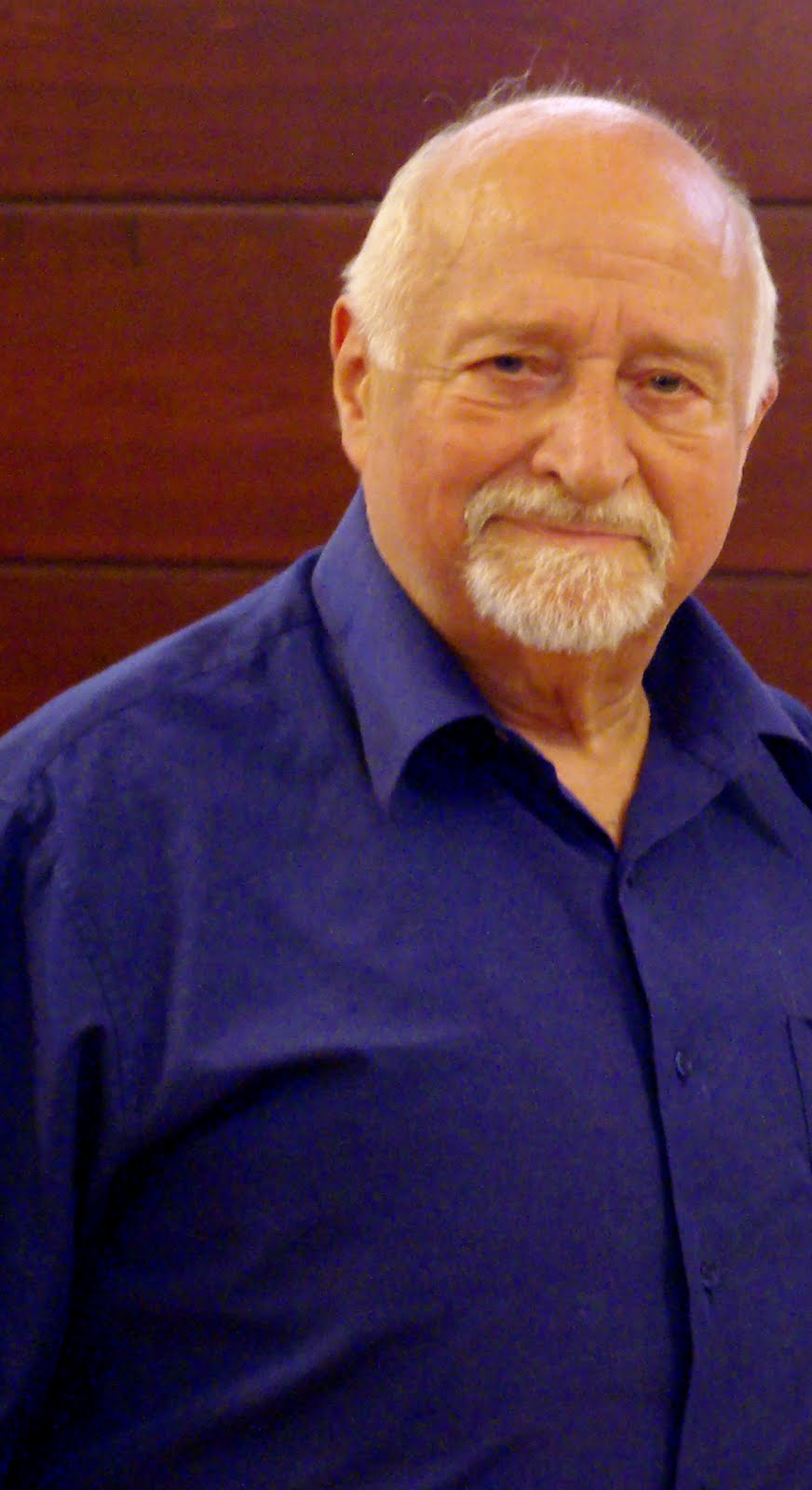
Thursday, July 8, 2010

IATC's Critical Stages Issues Call for Contributions

The International Association of Theatre Critics (IATC) is presently preparing the third edition of its web journal, Critical Stages.

The editorial board of Critical Stages, headed by Maria Helena Serodio (IATC honorary secretary general and professor at Lisbon University), as well as the journal's publisher, IATC president Yun-Cheol Kim, issued a call for contributions.

Kim writes: "Please contribute your articles, reviews, interviews, essays to the third edition of our web journal Critical Stages, which will be published in October, 2010. I would like to have as many countries represented in this international journal. The first two issues attracted so many visitors, more than 25,000 each, and I am sure we are doing the right thing with this journal to meet the expectations from the world theatre community toward us. Deadline for articles is August 31. You can visit the site at http://www.criticalstages.org/ and find the style and other guidelines on the front page."

ATCA members are invited to contribute.

For your convenience, the guidelines are as follows:
1) The review should concern a relevant performance during the current U.S. theatre season that would justify international attention, i.e., "that would be important for international critics and scholars to know about."

2) A double-spaced MS Word article file, 2,000 to 2,500 words (or 15,000 characters) in length should be submitted as an e-mail attachment. If written in English, the article should include an abstract – not longer than 200 words. If written in French, it should include an abstract in English.

3) The title of the article only should appear at the head of the article file. The author’s name and/or institution should not appear in the article file itself.

4) A separate file should contain a cover letter with author’s name, title of the article, address, e-mail address, telephone number, and professional affiliation.

5) The writer will have to provide at least three (3) high-resolution digital photographs (JPEG), as well as other types of illustrations.

A photo of a performance should include: title of the performance, name of the playwright (if there is one), name of the director, name of the company, theatre venue, date of the première of that performance, names of the actors (clockwise from top left) and photographer's credits. All necessary permissions for images should be provided. These photos can be in the form of an e-mail from the company, or documentation that you have procured the images from an official web site. In case the performance attended by the reviewer does not coincide with the opening night, the reviewer should somewhere register this fact in her/his text, but without interfering with the general information referring to that production (so that it should match the date recorded in national and international date bases).

6) All writing submissions will be reviewed by members of the editorial board of Critical Stages. This peer-review process will determine the suitability of the articles for publication. Reviews will selected on the principles of geo-political balance and quality of writing.

7) No fee will be offered for the contribution. At the moment, Critical Stages is, and will be, operated on a voluntary basis. (If and when the journal is able to generate enough revenue in the near-future, we will, of course, gladly pay for the contributions.)

8) The editorial board will be unable to read submissions of a different length or formatting from these stated guidelines.

9) Critical Stages is seeking original reviews, not reprints of reviews that have been published elsewhere. We ask that articles first published in Critical Stages include reference to the web address of the journal when they are republished elsewhere.

10) The deadline to submit the review is August 31, 2010. Please send your articles or any questions to Yun-Cheol Kim (yunckim911@yahoo.com) or Maria Helena Serodio (m.h.serodio48@gmail.com).

In this time of globalization, the members of the editorial board of Critical Stages are irresistibly curious as to what is happening in theatre around the world, and to learn the context of local performances. We hope you share our enthusiasm and will contribute your reviews, essays and articles to Critical Stages.

Message From IATC-AICT President Yun-Cheol Kim

Dear Colleagues and Friends,

Three weeks have passed already since we had our 25th World Congress in Yerevan, Armenia. I thank those of you who participated in the Congress for your great contributions to and cooperation for the success of this most important event of IATC-AICT. With those who could not come to this remote city, I would like to share the joy and pride of the achievements we made in the Congress.

I am extremely happy that the Code of Practice was finally approved, and almost unanimously. I hope these ten guidelines will be the lighthouse in performing our profession with intellectual freedom, professional integrity and critical competence. IATC-AICT also awarded its third Thalia Prize to Mr. Richard Schechner, whose writings and artistic works have greatly influenced our critical thinking for more than four decades. I am also very happy with the newly elected Executive Committee members. China has newly joined the excom, and Canada is now represented by Quebec Association of Theatre critics. With these two new members and the remaining eight incumbent members, the new Excom will work as hard as it used to, to serve well the IATC-AICT causes. I can assure you that we are a good team.

Now, I have a special request for all of you. Please contribute your articles, reviews, interviews and essays to the third edition of our web-journal Critical Stages, which will be published in October 2010. I would like to have as many countries represented in this international journal. The first two issues attracted so many visitors, more than 25,000 each, and I am sure we are doing the right thing with this journal to meet the expectations from the world theatre community toward us. Deadline for articles is August 31. You can visit the site http://www.criticalstages.org/ and find the style and other guidelines on the front page.

I wish you all nice holidays in good health.

All the best,
Yun-Cheol Kim
President, IATC-AICT

Wednesday, July 7, 2010

Georgia National Section Extends Invitation to Critics Symposium in Tbilisi

Irina Gogobéridzé, representative of the Georgia national section of critics, has extended an invitation to the member of the International Association of Theare Critics to attend the Tbilisi International Festival.

Gogobéridzé writes: "We are happy to inform you that the second edition of TBILISI INTERNATIONAL FESTIVAL OF THEATRE is going to be held in Tbilisi, 29 September through 16 October 2010.

"Together with the international program, we will present a Georgian showcase, with the new productions of well-known artists as well as young and emerging theaters. We will be happy if you become a showcase guest during the four days from 29 September to 2 October.

"The autumn in Tbilisi is warm. I hope very much that the theatre as well as the simultaneous translation will not disappoint you.

"Welcome to Tbilisi, one of the most theatrical cities in the world!"

INTERNATIONAL ASSOCIATION OF THEATRE CRITICS
TBILISI INTERNATIONAL FESTIVAL
SHOTA RUSTAVELI THEATRE AND FILM GEORGIAN STATE UNIVERSITY
Cultural Bridge
(Experienced Critics Symposium)

Theatres – Audience – Critics:
A ”Bermuda Triangle” or a “Holy Trinity”
Tbilisi (October 1 and 2)

Many theatre-makers and critics claim to work “on behalf of the audience.” Others – a minority but no less vociferous – openly deride this idea: their criteria, they say, dwell in an area much higher than the level (i.e. taste) of the audience.

The audience is generally reduced to mere statistics: this mysterious, many-headed creature is very rarely invited to break out of its anonymous state of existence and become real faces and individual voices. The bulk of the awards are given by juries composed of theatre professionals only, at times with the explicit aim of counteracting the audiences’ preferences and verdicts at that. Don’t we, theatre professionals, tend to take the audience for granted, while effectively excluding it from the theatre equation when we start discussing it? Don’t we light-handedly dismiss respect for the audience as mere crowd-pleasing? How can we strive to improve the standards of the theatre without paying closer attention to the concrete needs, desires and verdicts of the people who fill in its halls? Are we ready to admit that at times the type of theatre we praise is exactly that which drives audiences away?

This symposium is an invitation for a discussion between theatre professionals, critics and audience members on what we all gain when the three sides of Theatre – Audience – Critics triangle are considered of equal importance and what we all lose when the balance is disrupted. The symposium is not only “open to the public.” It will rely on its active participation.

Preliminary Program of the Symposium

The Symposium “Cultural Bridge” will be hosted by the Tbilisi International Festival during the Georgian Theatre Showcase on September 29–October 2, 2010:

September 29–October 1: Georgian Theatre Showcase

October 1 and 2: Cultural Bridge symposium

October 3: Departure of participants

The symposium will be held in sessions: morning session will last from 10 a.m. until 1:30 p.m., followed by lunch. Afternoon session will last from 3 p.m. until 5 p.m.

Afternoon session of the second day—Oct 2—will be dedicated to discussion on Georgian Theatre.

Term of presentations is 20 minutes.

Term of interventions (with prior notice) is 5 minutes.

Notification on participation and abstracts of presentations in English or French (no more than 200 words) should be mailed in advance (deadline for submission August 15) to Irina Gogoberidze (irenetval@gmail.com), Eka Mazmishvili (eka@osgf.ge) and Kalina Stefanova (kalina@eurointegra.com).

The papers and the interventions will be published after the symposium.

Number of IATC participants: 10-12 critics.

Hotel, receptions, lunch, transportation in Tbilisi, excursions, tickets to the performances will be covered by the hosts.

Preliminary information about the Georgia Showcase is available at this website: http://www.tbilisiinternational.com/.

If you are planning to participate, please contact Irene at irenetval@gmail.com. Note the performances you prefer to see during your stay in Tbilisi and return the form by 23 July 2010.

Mario Fratti Reflects on Armenian Theater and IATC Congress on "Femininity in Today's Theater"

We arrived one day early to enjoy the city. Flying Aeroflot (convenient and comfortable). The tourist office is well organized. They gave us two useful booklets: “Yerevan Scope” (Maps of Yerevan) and “Tour Info” (Armenia in Your Pocket). It contained precise information about Armenia’s population (3.2 million / 1.2 million in Yerevan) and full of details about museums and churches. We were particularly impressed by the Museum of Armenia Genocide; the Matenadaran, which housed ancient manuscripts; the History Museum; the National Gallery; and the Museum of Sergey Parajanov, a great artist who was also a friend of the filmmakers Federico Fellini and Tonino Guerra. We saw many original works of art, letters, photos and documents. There was also a sculpture dedicated to “26 Murdered Kommissars.”

I remembered from another trip to Yerevan, a stunning monument near the elegant Republic Square. I went to see it again. I was disappointed. It is no longer there. I was told it was destroyed by vandals.

We stayed in two hotels. The Metropole and the Shirak, both easy to reach. Our efficient Secretary General Michael Vais had organized every minute of our stay in Yerevan: list of the participants, meetings, symposia, time for the elections, and a biography of the winner of the Thalia Prize: our brilliant critic Richard Schechner. Michel even gave us a new “Code of Practice,” to be discussed during the Congress.

We began promptly at 10 am with a speech from our distinguished president, Yun-Cheol Kim. He reminded us of the theme of this year’s congress: “Redefining Femininity in Today's Theater.” (He was later unanimously re-elected to his IATC post.)

I listened with curiousity to all the papers written and delivered by the participants: Margareta Sörenson (Sweden), Jean-Pierre Han (France), Akiko Tachiki (Japan), Katayoun Hosseinzadeh Salmasi (Iran), Zhang Xian (China), Randy Gener (U.S.A.), Savas Patsalidis (Greece), Deepa Ganesh (India), Guna Zeltina (Latvia), Zane Radzobe (Latvia), Maria Helena Serôdio (Portugal), Patricia Keeney (Canada), Ravi Chaturvedi (India) and Ravinder Kaul (India). They all revealed details about great women in their countries, their huge contribution to education and culture. Maria Helena Serodio gave us useful information about a Jewish writer who was persecuted and died young in Portugal: Antonio Jose da Silva. He wrote nine plays that are being republished and maybe performed. The poet, Patricia Keeney, passionately defended the plays and achievements of the Canadian playwright, Judith Thompson; it was a discovery for many of us. Katayoun let us know that the condition of women in Iran is improving.

The delegates from India, China and Japan surprised us with lists of great directors and actresses whom we did not know, unfortunately. Margareta Sorenson reminded us that we must research and read articles and works written by Asian women.

We learned about many new playwrights including the new ones in Armenia: Yernjakyan, Shant, Demirchyan, Ananyan, Yernjakyan, Khodikyan, Santoyan, Teqgyozyan. Their hero is anyhow, William Saroyan, whom they call “the Good Giant.”

Every evening at five and at nine we were invited to see performances. Three evenings were dedicated to Saroyan’s plays: Salvation Island, You Are Coming Into the World (Marionette), and Stories in the Train. This last piece was well-directed and conceived with great sense of humor by Marine Malyan.

I focused on contemporary Armenian productions. I saw and applauded Anush by A. Tigranyan, a powerful and moving opera, a tragic love story that reveals the poetry of the Armenian world; Frank Werfel’s The Forty Days of Musa-Dach, about the Armenian resistance against the Turks in 1915; Durrenmatt’s The Old Woman’s Visit; and a stunning Macbeth, directed by Armen Khandikyan, with two powerful actors, Arthur Utmazyan and Luiza Ghambaryan. I also enjoyed in the elegant Chamber Theatre The Call of Glowworm, written and directed by Ara Yernjakyan. It is a brilliant satire about power, well-acted by Rafael Yeranosyan, Andranik Harutyunyan and Katrin Manasyan.

At the end of the Congress, we had a polemic, an ironic and pleasant acceptance speech by the Thalia winner Richard Schechner.

It was a successful Congress, but I had to conclude that their papers did not focus on Femininity. I shared with the participants my theory about the subject, which I have depicted in two of my plays. Feminine, gentle, poetic, vulnerable women have no chance in our society. They will become victims. — Mario Fratti

Thursday, June 3, 2010

Critical Stages Publishes its Spring 2010 Issue

The second issue of Critical Stages, the webjournal of the International Association of Theatre Critics (IATC), came out this spring. 

Yun-Cheol Kim, publisher of Critical Stages and IATC president, said, "All of the editors, headed by Dr. Maria Helena Serodio, have worked extremely hard to make this 'crazy project' a sustainable reality. This journal will be our contribution to world theatre, and serve greatly to make theatre and theatre criticism matter in our society."

In her editorial, Serodio added that the second issue "brings with it the evidence that the IATC is able to pursue one of its main goals: to highlight the need (and the importance) of critics and criticism in the field of theatre. But this claim is not to be held as a vain conceit: it only means that we assume this as a challenge and a responsibility, so that we shall do our best not to disappoint artists, readers and theatre audiences alike."

Three American critics were prominent contributors to the second issue. San Francisco-based writer and acting teacher Lissa Tyler Renaud interviews theatre directors David Zinder and Stan Lai (Lai Sheng-Chuan) in the "Theatre Views" department.

A daring contribution comes from New York-based critic and author of the book Theatre Voices, Steve Capra who actually reviews the first edition of Critical Stages, published this past fall. In his article in the Book Reviews" department, Capra, a dedicated member of the International Committee of the American Theatre Critics Association, writes:

The interviews, the reviews, the discussions of our iconic influences―these all reflect an erudite and articulate critical community. Indeed, Robert Greig's review is close to a model of analysis. Naturally, the material paints a more sanguine portrait of world theatre than it deserves. As our publisher rightly notes, “The theatre is in a real crisis.” The unique contribution of the issue lies in its first and final sections: “Theatrical Commentary and Professing Theatre Criticism” (it’s unclear why the sections are separate). It’s here that Critical Stages addresses its mission most directly, and we find discussions of criticism per se, material that contextualizes our work. It somehow validates us.

In addition, on the eve of granting the third Thalia Prize to Richard Schechner in IATC's forthcoming Congress in Yerevan, Armenia, to be held in June, American Theatre senior editor Randy Gener subjects the French critic, playwright and essayist Jean-Pierre Sarrazac to a Proust Questionnaire. The speech Sarrazac read in Sofia is also published in French. Sarrazac received the second Thalia Prize in Sofia two years ago “for having influenced critical thinking about the art of theatre.”

In the accompanying photos, the article shows the emblem of the Thalia Prize, which was specially commissioned from the distinguished Romanian stage and artist-designer Dragos Buhagiar: a cane with a silver top, representing Thalia, the Greek muse of comedy. (Incidentally, an interview of Buhagiar appears in the same spring issue.)

Says Kim, "The second issue shows some improvements over the first one. Now we have some moving images, more visual designs, and the archive where you can refer to the past issues. I have no doubt that Critical Stages will soon become one of the best resources, one of the most informative and relevant theatre journals in the world, especially given that we have such a rich pool of fine writers in every corner of the globe. Your suggestions to make it better are always welcome. Please visit the IATC Webjournal and invite your students, colleagues, and your entire theatre community to visit and make use of it."


"Redefining Femininity" Symposium for IATC World Congress Announced

The International Association of Theatre Critics (IATC) announced June 2 the preliminary program for its next World Congress, which takes place June 15-20 in Yerevan, Armenia.

The theme for this year's congress is "Redefining Femininity in Today’s Theatre." The call for papers, issued earlier this year, states:  "The concept of femininity seeks in today’s theatre its own place, language, identity and expression. In the 21st century, it has reemerged as a creative issue. In a sense, even the masculine subject is isolated in the phallocentric system. “Alliance,” for example, is emphasized over “self” as a recurring theme, “difference” over “homogeneity,” “sense and experience” over “abstraction,” as well as “nature” over “civilization.” Can we characterize and explain the various phenomena of this 21st century concept of femininity?

"Some of the main elements characterizing the changing theatrical models which have emerged or developed under the aegis or influence of this new paradigm seem to encompass new subject matter; changes in plot and character; new developments and thinking in terms of the relationships between body and language; shifts in the encounters between the performers and the spectators; a reordering of the symbolic and thematic structures; a recognition of “the other”; poetic attention and expression to individuality and everyday-ness; fresh perspectives on the roles of memory, politics, gender, class, race, and family."

Papers on that theme will be presented by a motley of speakers. The preliminary program schedule, divided into three sessions, is as follows:

SESSION I, June 16, Wednesday, 10:00-13:00:
Chair: Margareta Sörenson

Keynote Speech:
Maria Helena Serôdio, Portugal, Editor Critical Stages, Honorary General Secretary:
Reframing the Feminine: Some Classical Heroines on the Contemporary Stage
Un nouveau cadre de féminité : Quelques héroïnes classiques sur la scène contemporaine
Jean-Pierre Han, France, vice president IATC:
The Position of Femininity in French Theatre
La position de la féminité dans le théâtre français
Ravi Chaturvedi, India:
The Emergence of the New Woman: Reflections on Indian Theatre in the 21st Century
L’émergence de la femme nouvelle : Réflexions sur le théâtre indien du 21e siècle

Guna Zeltina, Latvia:
The Emergence of the Concept of Femininity in Latvian Theatre
L’émergence de l’idée de féminité dans le théâtre lituanien

Katy Salmasi, Iran:
Feminism, Art and Theatre in Iran
Féminisme, art et théâtre en Iran

Deepa Ganesh, India :
The Woman’s Voice in Indian Theatre
La voix de la femme dans le théâtre indien


SESSION II, Wednesday, 15:00-17:00:
Chair: Jean-Pierre Han
Birgitte Purkhardt, Québec, Canada:
The Evolution of the Female Character in the Imagination of Québec’s Playwrights
L’évolution du personnage féminin dans l’imaginaire des dramaturges québécoises

Patricia Keeney, Canada:
Where the Wild Things Are: A Study on Canadian Playwright Judith Thomson
Où tout est sauvage, étude sur la dramaturge canadienne Judith Thomson

Randy Gener, USA:
Women and War: On Lynn Nottage’s Ruined
Les femmes et les guerres : Sur Ruines de Lynn Nottage
Savas Patsalidis, Greece :
Recontextualizing Sacrifice, Revenge and Power: Ellen MacLaughlin’s Iphigenia and Other Daughters
La recontextualisation du sacrifice, de la revanche et du pouvoir: Iphigénie et autres filles de Ellen MacLaughlin

Akiko Tachiki, Japan:
Femininity/Masculinity: Beyond the Border
Féminité/Masculinité : au-delà des limites


SESSION III, Thursday 10:00-13:00:
Chair: Randy Gener

Ravinder Kaul, India:
Redefining Femininity in Indian Modern Theatre
La redéfinition de la féminité dans le théâtre indien contemporain

Margareta Sörenson, Sweden, vice president IATC:
Femininity and Body Language, Reflections on Pina Bausch and Mats Ek
Féminité et langage du corps ; réflexions sur Pina Bausch et Mats Ek

Jae-Min Shim, Korea:
Lee Breuer’s Dollhouse
La maison de poupée de Lee Breuer

Zhu Ning, China:
The Female Directors in the New Theatre Market
Les femmes metteurs en scène sur le nouveau marché du théâtre

Zane Radzobe, Latvia:
Redefining Feminine: National Romanticism in Three Performances by Alvis Hermanis
La redéfinition de la féminité : Le romantisme national dans trois spectacles de Alvis Hermanis

Magdalona Jakfalvi, Hungary:
The Women, The Regimes
Les femmes, les régimes

Philip Zitowitz, Japan:
On the Geisha Today
Sur la geïsha aujourd’hui


Discussion and closure of the conference
Discussion et clôture du colloque

Wednesday, May 26, 2010

Paulo Eduardo Carvalho, IATC Director of Seminars for New Critics, Dies at 45

Paulo Eduardo Carvalho
July 7, 1964 – 20th May 20, 2010

Born in Oporto on 7th July 1964, Paulo Eduardo Carvalho graduated from the Faculty of Letters, University of Oporto, in 1984, with a degree in Modern Languages and Literature (Portuguese and English Studies); taking the Translation Course in Modern Languages and Literature at the same university, in 1990. He then went on to complete a Master’s degree in English Studies at the Faculty of Letters, University of Lisbon, in 1993, with A História no Território da Imaginação: A Irlanda de Brian Friel e Field Day [History in the Territory of the Imagination: The Ireland of Brian Friel and Field Day].

2007 saw Paulo receive his PhD in English Studies from the Faculty of Letters, University of Oporto, for Identidades Reescritas: Figurações da Irlanda no Teatro Português [Rewritten Identities: Representations of Ireland in Portuguese Theatre]. This study, remarkable for its documental, theoretical and critical consistency, was subsequently published by Edições Afrontamento in 2009.

In addition to taking intensive courses abroad (most frequently in England, Ireland and Italy), Paulo was an outstanding presence in a host of international events organised by the International Association of Theatre Critics (IATC-AICT), the English Society for the Study of English (ESSE) and the International Federation for Theatre Research (FIRT-IFTR). He also presented papers at Trinity College (1999), the Dublin Theatre Festival (2003), a number of IATC-AICT congresses, and at various European universities to which he was invited.

He was responsible for cultural activities in various major institutions in Oporto, such as Teatro Nacional São João and Rivoli Teatro Municipal; in addition to collaborating with the Serralves Foundation, ESMAE (the School of Music and Performing Arts) and the Eugénio de Almeida Foundation, among others.

A keynote speaker at numerous conferences and colloquiums (in Portugal and abroad), Paulo always brought tremendous energy and enthusiasm to debates on the theatre, literature, cinema, music and the fine arts, working with various institutions in the organisation of colloquiums, publications, courses and exhibitions, among countless other activities.

He was a tireless member of the Institute for Comparative Literature Margarida Losa at the University of Oporto; the Centre for Theatre Studies at the University of Lisbon and the Department of English and American Studies at the University of Oporto; making a vital contribution to colloquiums, seminars, conferences, exhibitions and various publications.

He joined the Board of the Portuguese Association of Theatre Critics in 2004, representing it on the IATC-AICT Executive Committee, and was currently the International Association’s Director of Seminars for New Critics.

In 2004, Paulo co-founded the magazine Sinais de Cena (produced by the Portuguese Association of Theatre Critics together with the University of Lisbon Centre for Theatre Studies), immediately joining the Editorial Board and regularly contributing articles, reviews and translations. He was also part of the team involved in producing the Cadernos de Literatura Comparada at the Institute for Comparative Literature Margarida Losa at the University of Oporto.

In the theatre, he was a founder member of the Oporto company, Assédio, did dramaturgical work with various directors and translated over forty plays by such diverse authors as Brian Friel, Samuel Beckett, Harold Pinter, Martin Crimp, Martin McDonagh, Marina Carr, Athol Fugard, Caryl Churchill, Wallace Shawn, Frank McGuinness and Thomas Kilroy, among others.

A man of vast learning, blessed with boundless energy and a rare artistic sensibility, Paulo Eduardo Carvalho was a major figure in both Portuguese theatre and Portuguese theatre studies. He established a remarkable level of academic rigor in dealing with the theatre, which was reflected by what he wrote in the field of the essay and critical analysis, clearly shown in his book on the Portuguese director, Ricardo Pais, Ricardo Pais: Actos e Variedades [Ricardo Pais: Acts and Variety] (Oporto: Campo das Letras, 2006).

He lived generously and lovingly, always available to anyone needing his advice and priceless help.

Paulo left us on 20th May. During a warm afternoon, he was tragically taken by the sea; and all who knew him are left with a huge, immeasurable sense of loss.

It is with an immense sorrow that I have to announce the tragic death of our colleague and member of the executive committee of IATC representing Portugal, Paulo Eduardo Carvalho. Dr Carvalho was also director of the seminars for new critics of IATC. Pleased read the obituary below, and pass the word to all who may have known him. On behalf of the IATC, I express my deepest condolences to his family, to his numerous friends and to his colleagues.